Opening up the spaces of Ireland's heritage
Torc Studio builds interactive virtual heritage sites you can explore from anywhere.
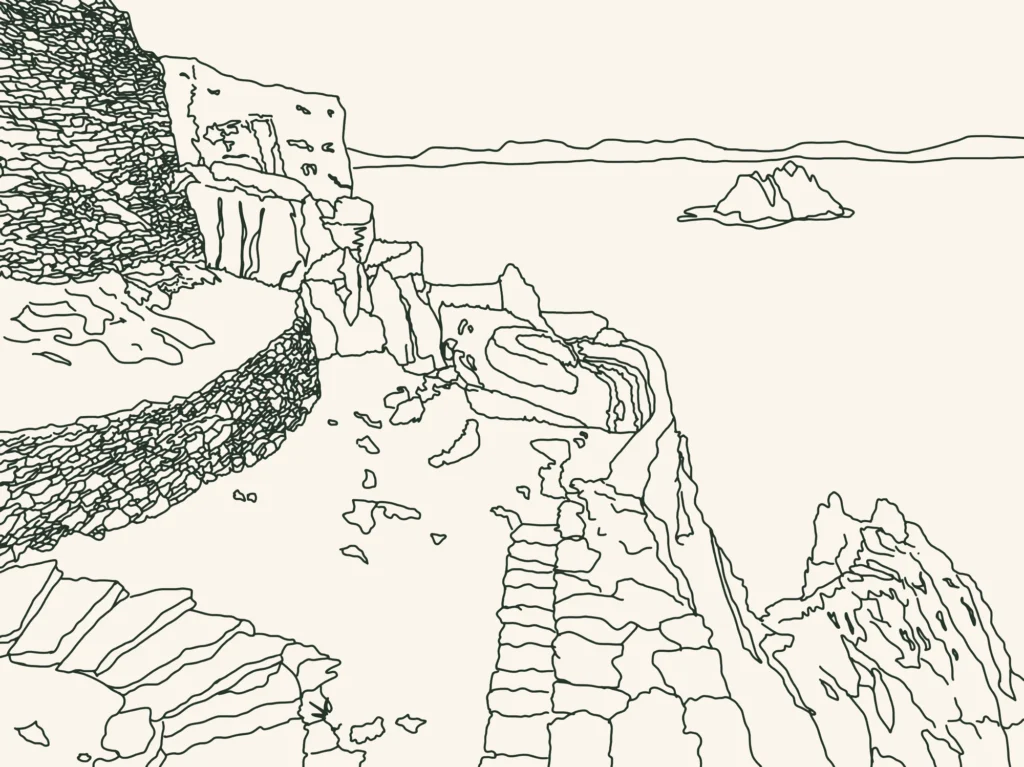
Real places, Retold
We combine architectural expertise, high-resolution 3D scanning and game design to turn real heritage sites into places you can explore, and to tell the stories tied to them. We aim to strike a balance between authenticity of place and interpretation of story, bringing together technology, local knowledge and creativity. Building this way means we can work around conservation limits, reach weather-exposed and hard-to-access sites, and give each place real character instead of a generic digital twin.
One environment, built for three different uses
Tour Mode
Explore the site at your own pace and interact with its history in ways not possible at the real site.
Pre-Visit Mode
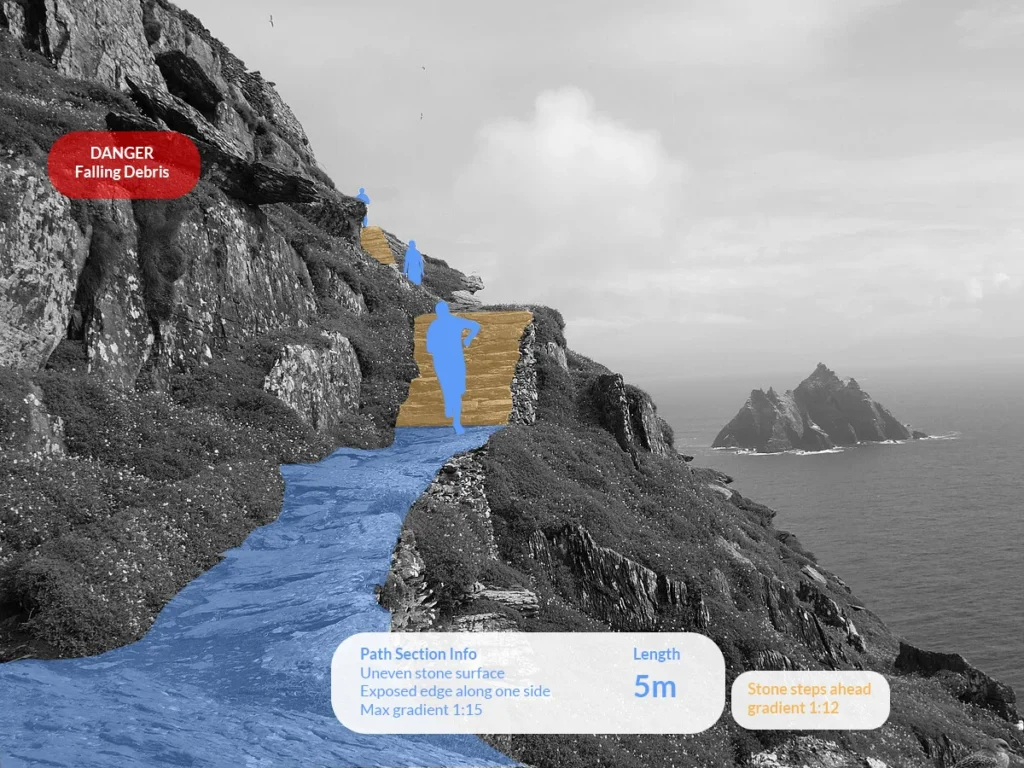
See what you're getting into before you book the crossing — the terrain, the steps, what to actually expect.
Classroom Mode
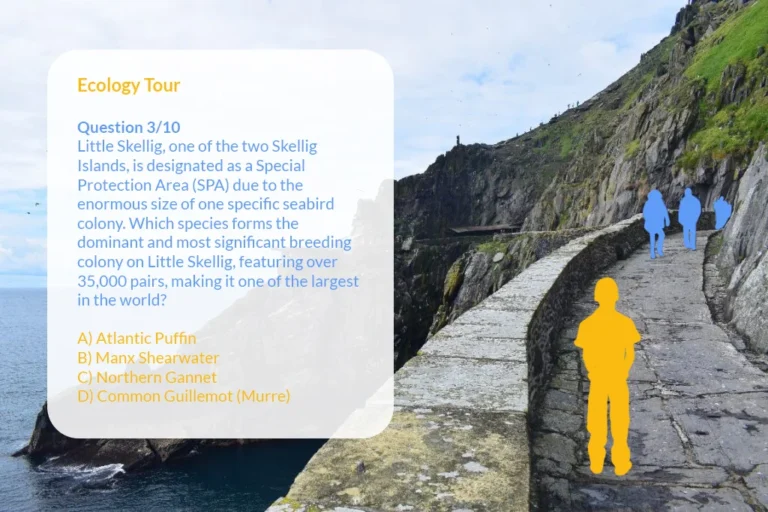
The same environment paired with curriculum content, so a class can prepare for a trip or reach sites too far from their location.
ATU Student Entrepreneur Awards 2026 - 3rd Place
Selected for the CREW Landing Studio, launched by the Western Development Commission.
Building a prototype on Skellig Michael.
Two people trying to make heritage sites easier to reach
Torc Studio is based in Sligo. We're a two-person studio for now — one architect, one animator — building the first full-scale version of what we think heritage access should look like.
Some heritage sites are hard to reach because of weather, distance, cost, or physical accessibility. Others are hard to reach because too many visitors would damage them. Either way, the site stays out of reach for a lot of people who'd otherwise be able to see it.
We build a version of the site you can visit from a laptop or a games console instead — not as a replacement for going in person, but as a way in for the people who can't.
We're not trying to build a photorealistic copy of anywhere. Real-world scans go in as reference and as individual elements — a doorway, a set of steps, a stretch of wall — but the wider environment is built by hand, in a deliberately stylised, non-photorealistic style. Think diorama, not simulation. It's a creative decision as much as a practical one, and it lets us respect conservation constraints while still building something with its own character.
Patrick Brennan
A registered architect with five years in the public service delivering heritage conservation projects. Also trained in game development — which is roughly how a career in architectural conservation ends up building a virtual monastery.
LinkedIn
Janess Dunlea
Trained in animation at Pulse College, with four years volunteering with the CDPA. Brings the environmental and creative eye to the studio — the parts of a site that are easy to miss in a technical scan.
LinkedInSkellig Michael
Skellig Michael sits eleven kilometres off the Kerry coast. It’s a monastic settlement built into a rock in the Atlantic, lived in from around the sixth to the twelfth century. It’s a UNESCO World Heritage Site, and getting there depends on the weather, a boat crossing and over six hundred stone steps.
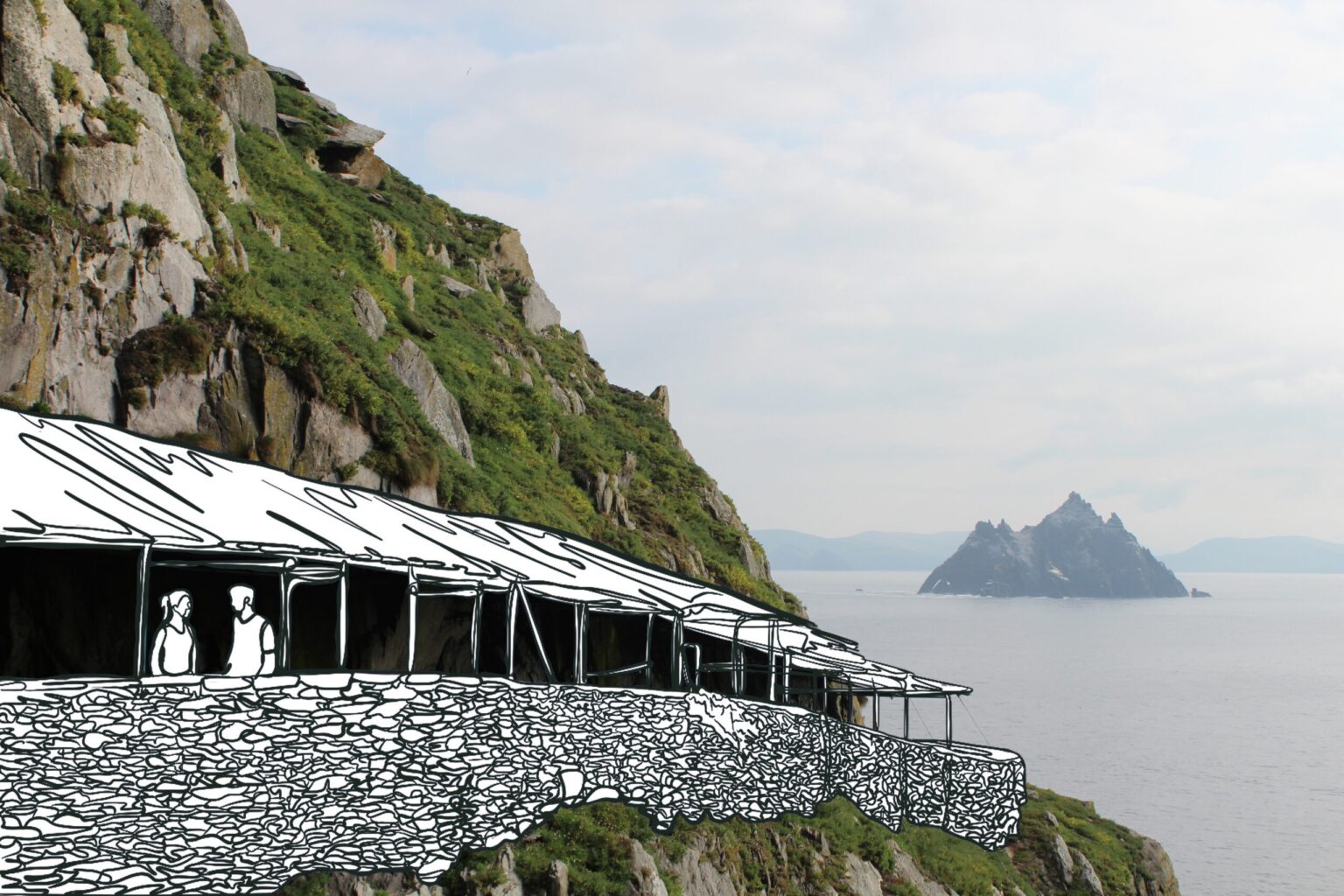
Skellig Michael is a demanding test of what we do. It’s culturally significant, physically difficult to reach, and access is limited by its location and fragility. If our approach works here, we’re confident it can work at sites right across the country.
It's also our prototype and it's where we're proving out our methods before taking them further.
Alongside the Skellig environment, we’re developing the systems that will sit behind every Torc project: how we capture a site, how we process and build it, and how visitors move through it in Tour, Pre-Visit and Classroom modes. Each of these is designed to be reused. Every new site we take on starts from a tested foundation, so we can spend more of our time on what makes each place distinct.
We’re capturing the site using 3D scanning methods suited to a remote, weather-exposed location, then rebuilding it in Unreal Engine 5 as a stylised environment you can walk around freely, choosing where to go and what to look at.
Tour Mode
For anyone. Explore the monastery, the beehive cells and the terraces at your own pace, on a laptop or games console.

Pre-Visit Mode
For people planning the real trip. Get a proper sense of the terrain, the steps and the exposure before you commit to the crossing.
Classroom Mode
For schools. The same environment paired with curriculum content, so a class can explore the site together.
Status: in active development
Skellig Michael is our current focus, and the systems we build here will carry into every site that follows. We’ll share progress on our .
We work with the people who look after, teach with, and send visitors to heritage sites
We build a version of your site that extends access without adding footfall — useful anywhere there are conservation limits, physical accessibility barriers, or more demand than the site can safely handle. Digital accessibility requirements are also becoming a bigger part of how heritage sites are expected to operate; we're happy to talk through what that means for a particular site if it's relevant to you.
Classroom Mode gives a class a heritage site they can genuinely explore together, built to sit alongside what you're already teaching — not just another set of photos on a slide.
A pre-visit experience gives people a real reason to plan the trip, and a realistic idea of what they're signing up for — which tends to make for better visits once they arrive.
From first conversation to release
- Client brief, scoping and organising site access
- On-site Gaussian splatting capture, site surveying and audio recording
- Community engagement and research
- Design of the experience
- Build of Tour and Pre-Visit modes
- Accessibility and user testing
- Review with stakeholders
- Release and ongoing maintenance
Thinking about a pilot?
Get in touch and we'll talk through what a project on your site could look like.
Get in touchNews & progress
What's happened so far, roughly in order.
3rd place, ATU Student Entrepreneur Awards
Torc Studio placed third at the 2026 awards.
Selected for the CREW Landing Studio
One of nine startups chosen for the Landing Studio programme in the CREW Building, launched by the Western Development Commission.
Skellig Michael project in development
Our prototype project is currently in active development. More updates soon.
Get in touch
Whether you look after a heritage site, teach at one, or you're just curious about what we're building — we'd like to hear from you.